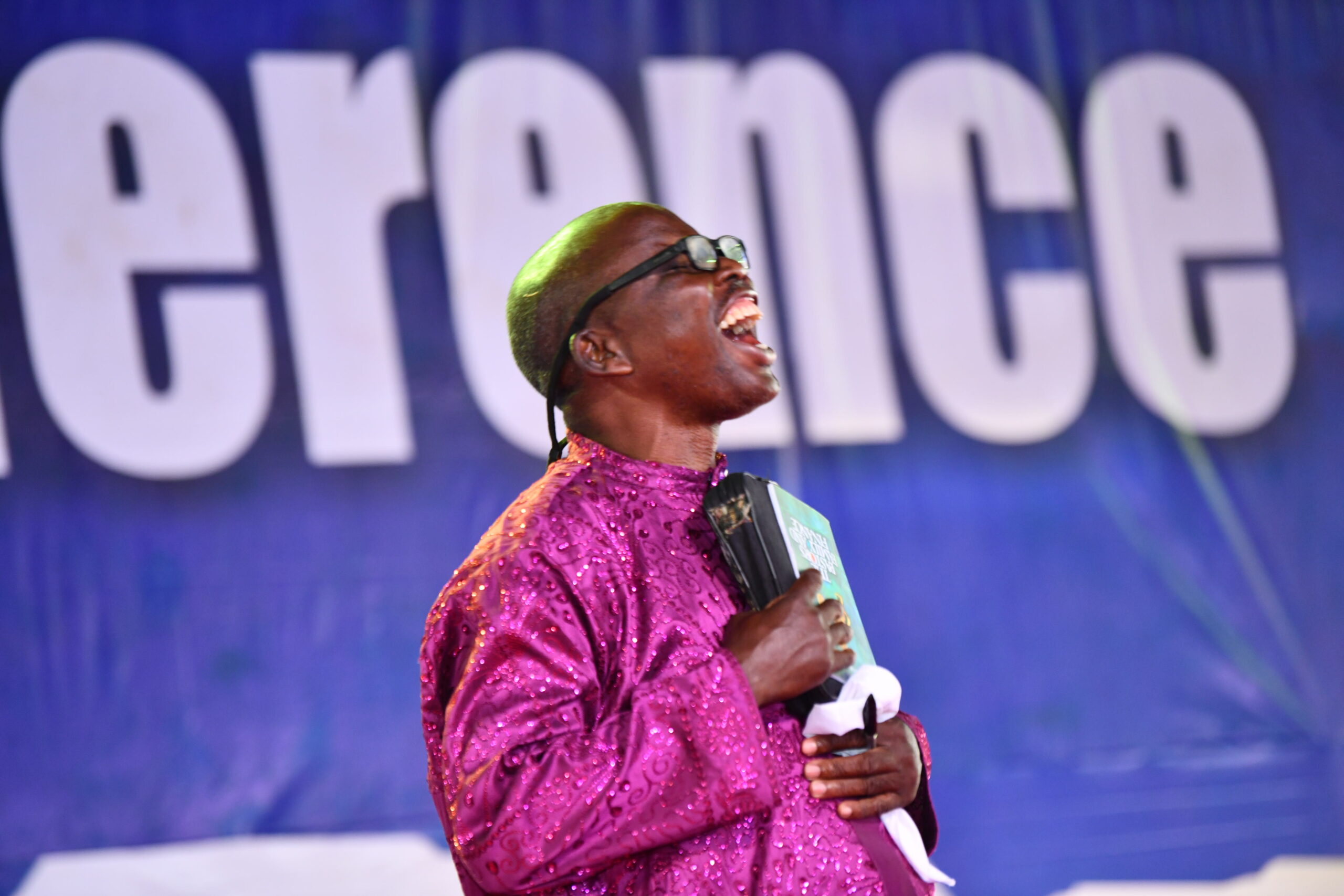

Faith is not merely what we profess with our mouths. It is reflected in the way we think, the decisions we make and how we conduct our lives.
The Bible says, “The just shall live by faith.” This means that our daily lives should reflect the belief system we claim to have. Our faith should influence our attitudes, our work, our leadership, our finances and our responsibility towards society.
I want to share an experience that made me think deeply about the relationship between faith and responsibility.
I was travelling in a commercial bus from Port Harcourt to Warri when a young man who was hawking medication entered the bus.
During his conversation with the passengers, he announced that he had passed an examination he did not write. He had not even sat for the examination, yet he claimed that he had passed. Then he shouted, “Praise the Lord!”
The passengers responded, “Hallelujah!”
I began to wonder: How can somebody celebrate passing an examination he never wrote?
That incident captures one of the paradoxes of our understanding of faith. We sometimes expect God to give us results without our participation in the process.
We want success without preparation, promotion without performance and rewards without responsibility.
But is that the kind of faith the Bible teaches?
From the beginning, God gave humanity responsibility for the earth.
In Genesis, Adam was placed in the Garden of Eden to tend and keep it. God did not create the garden and then expect Adam to sit down and watch it manage itself. Adam had a responsibility to cultivate and maintain what had been entrusted to him.
Jesus also challenged His disciples to continue His work. In John 14:12, He spoke about those who believe in Him doing the works He did and even greater works.
Yet, many of us keep troubling God with responsibilities we are supposed to handle.
God will not conduct elections for us. We must make responsible choices about the leaders we elect. God will not clean our streets for us. We must develop the discipline to maintain our environment. God will not automatically create functional institutions while we neglect our duties as citizens and leaders.
Faith should inspire responsible action, not replace it.
One of the problems confronting many African societies is our desire for the benefits of leadership without accepting the responsibilities that come with it.
We want popularity without accountability. We want political positions without public service. We want the privileges of democracy without respecting the people’s interests and consent.
We rig elections and then go to churches and mosques to thank God for our victories.
We celebrate political victories even when the processes that produced them were dishonest. We sometimes invite politicians whose records raise serious questions to occupy prominent positions at religious celebrations. We pray for them to prosper without asking whether their leadership has improved the lives of the people.
Has God become an accessory to our dishonesty?
We must examine the contradictions in our conduct.
We cannot claim to value democracy while undermining the people’s mandate. We cannot condemn corruption in public and celebrate those who practise it when they support our personal interests.
The problem is not simply the people in positions of authority. It is also the culture of irresponsibility that allows dishonesty to become acceptable.
Many people desire wealth, but they are unwilling to embrace the principles that produce and sustain it.
We want good salaries without good work. We want financial prosperity without financial intelligence. We want wealth without savings, productivity or frugality.
Some people raise their phones, hoping to receive miraculous financial alerts. But have they considered whose account the money is supposed to come from? What value have they created? What work have they done?
There is nothing wrong with praying for financial breakthrough. But prayer should not make us abandon diligence, planning and productive work.
The Bible says in Proverbs 22:29:
“Seest thou a man diligent in his business? he shall stand before kings; he shall not stand before mean men.”
Diligence is a principle. You cannot continually neglect your work and expect to enjoy the rewards of consistent productivity.
We must also learn to live within our means. Financial prosperity requires the ability to manage money, distinguish between needs and wants, save, invest wisely and maintain what we acquire.
You cannot continually buy things you cannot afford to maintain and then complain that your finances are not improving.
Another contradiction in our society is the way we neglect our institutions while spending enormous resources elsewhere to access the services those institutions should provide.
I remember when I was in medical school at the University College Hospital, Ibadan. I recall that members of the Saudi royal family were brought there for medical treatment. I also studied alongside people from places such as Hong Kong and the United States.
Our institutions once attracted people from different parts of the world.
Today, many Nigerians travel to India, Dubai and other countries for medical treatment. We send our children overseas because we have lost confidence in many of our educational institutions.
What happened to the hospitals and universities we should be improving?
We cannot keep destroying our institutions and expect them to produce world-class results. Institutions require investment, competent management, accountability and consistent supervision.
The same applies to our economy. We spend our wealth abroad, acquire properties overseas and depend on foreign countries for things we should be producing locally. Yet, we complain about the weakness of our currency and the state of our economy.
We must begin to ask ourselves what kind of society we are building.
It is not enough to desire a prosperous nation. We must be willing to create the conditions that make prosperity possible.
Sometimes, our spending habits reveal how little thought we give to financial management.
You see people who want to drive Mercedes-Maybachs, Lamborghinis and Rolls-Royce Phantoms in a country where many roads are in terrible condition.
The question is not whether these vehicles are beautiful or desirable. The question is whether the person buying them has considered the cost of maintenance, the condition of the environment and the practical demands of owning such assets.
Why acquire what you cannot maintain?
Why spend money trying to impress people while neglecting investments that could improve your financial future?
Financial intelligence requires more than the ability to make money. It includes knowing how to preserve, manage and deploy money productively.
We must learn that wealth is not simply about what we own. It is also about what we can sustain.
Another problem I have observed is that people establish visions but fail to supervise them.
Vision is important, but vision without supervision can become an abandoned ambition.
I recently came to supervise admissions activities at our school, Petra Christian Academy, here in the Aqua Cocoa area. My presence made a difference.
A woman saw me and recognised that I was the proprietor. She had heard me preach and immediately expressed interest in bringing her children to the school.
Imagine that she enrols four children and pays ₦100,000 per child. That is ₦400,000. Over three terms, it becomes ₦1.2 million annually. Over ten years, that represents ₦12 million, assuming the same fees and uninterrupted enrolment.
That opportunity came partly because I was present.
Another woman also expressed interest in bringing her children. During interviews for teaching positions, some candidates who came to meet us said they were determined to work at the school.
My daughter also stayed until about 7:30 or 8:00 p.m. to conduct interviews and help with the process.
These experiences reminded me of something: the presence of leadership communicates commitment.
When people see that the owner is involved, they understand that the institution matters. They see that someone is paying attention.
You cannot establish a vision, abandon it and expect it to grow by itself.
If you have a business, supervise it. If you establish a school, pay attention to the teachers, students, parents and administrative processes. If you start a project, monitor its progress.
A vision that is not supervised can be destroyed by people who have no vision.
One of the most disturbing contradictions in our society is that we condemn corruption in our conversations but sometimes celebrate corrupt individuals when they serve our interests.
We complain about bad leadership, yet we give prominent positions to questionable public figures during religious ceremonies.
Sometimes, a thanksgiving service will not begin until an important politician arrives. When that politician eventually comes, everyone celebrates, and prayers are offered for his protection and prosperity.
But what about accountability?
What about the people who have suffered because of poor leadership? What about the hospitals without adequate facilities, the schools without proper resources and the communities without basic infrastructure?
We cannot claim to be people of faith while consistently rewarding behaviour that damages society.
Our religious activities should not become opportunities to legitimise wrongdoing.
If we truly believe in righteousness, honesty and justice, those values must influence whom we celebrate, what we tolerate and how we conduct ourselves.
Many Africans travel to Jerusalem, Mecca, Rome and other religious destinations. These journeys may be meaningful expressions of faith, but we must also ask what happens when we return home.
Do we return with a stronger commitment to building our communities?
Do we become more disciplined, honest, productive and compassionate?
Or do we return to the same habits that contribute to the problems we complain about?
There is something wrong when we admire the order, infrastructure and institutions of other societies but refuse to practise the discipline required to build similar systems at home.
We cannot continually admire what other nations have achieved while neglecting the principles that made those achievements possible.
Another contradiction is our desire for people who will help us fulfil our destinies when we are unwilling to help others fulfil theirs.
Everybody wants a destiny helper. Everybody wants someone to open a door, provide an opportunity, make a recommendation or offer financial assistance.
But how many people are willing to become destiny helpers?
How many are willing to mentor someone, employ someone, teach a skill, support a struggling business or create an opportunity for another person?
Life is not a gamble. It is lived according to principles.
If you want people to help you, develop the habit of helping others. If you want opportunities, become someone who creates opportunities. If you want to experience generosity, learn to be generous.
You cannot build a meaningful life around receiving while refusing to contribute.
If Africa must progress, Africans must begin to embrace the principles that support development.
We must value education, research, creativity, innovation and productive work. We must celebrate people who develop useful skills, build businesses, create employment and solve problems.
Our young people need to understand that their greatest assets are not merely their physical appearance or social popularity. Their knowledge, competence, creativity and ability to create value can open doors that appearance alone cannot sustain.
We must also teach financial discipline, integrity, accountability and respect for public resources.
A nation cannot prosper when its citizens want wealth without productivity, leadership without service and influence without responsibility.
The same principles apply to individuals. You cannot continually avoid responsibility and expect your circumstances to improve.
The Bible says that the just shall live by faith. But genuine faith must influence the way we live.
If you believe in God, let that belief reflect in your honesty, diligence, financial decisions, leadership and treatment of other people.
Do not pray for promotion while refusing to perform. Do not ask God for wealth while neglecting financial intelligence. Do not pray for a better nation while contributing to the destruction of its institutions.
Faith should make us more responsible, not less responsible.
We must stop asking God to do everything we are unwilling to do ourselves. Our faith must translate into action, productivity, integrity and responsibility. Otherwise, our profession of faith becomes a contradiction.
I remain your friend, Dr. Charles H. Apoki. God bless you.
Remember to subscribe to this channel, like this video and share it with others.
We also have properties available for sale. You can send a message to +234 705 213 6763.
And remember, we have a beautiful school here at Petra Christian Academy. Bring your children and give them the opportunity to learn and grow.
God bless you.


