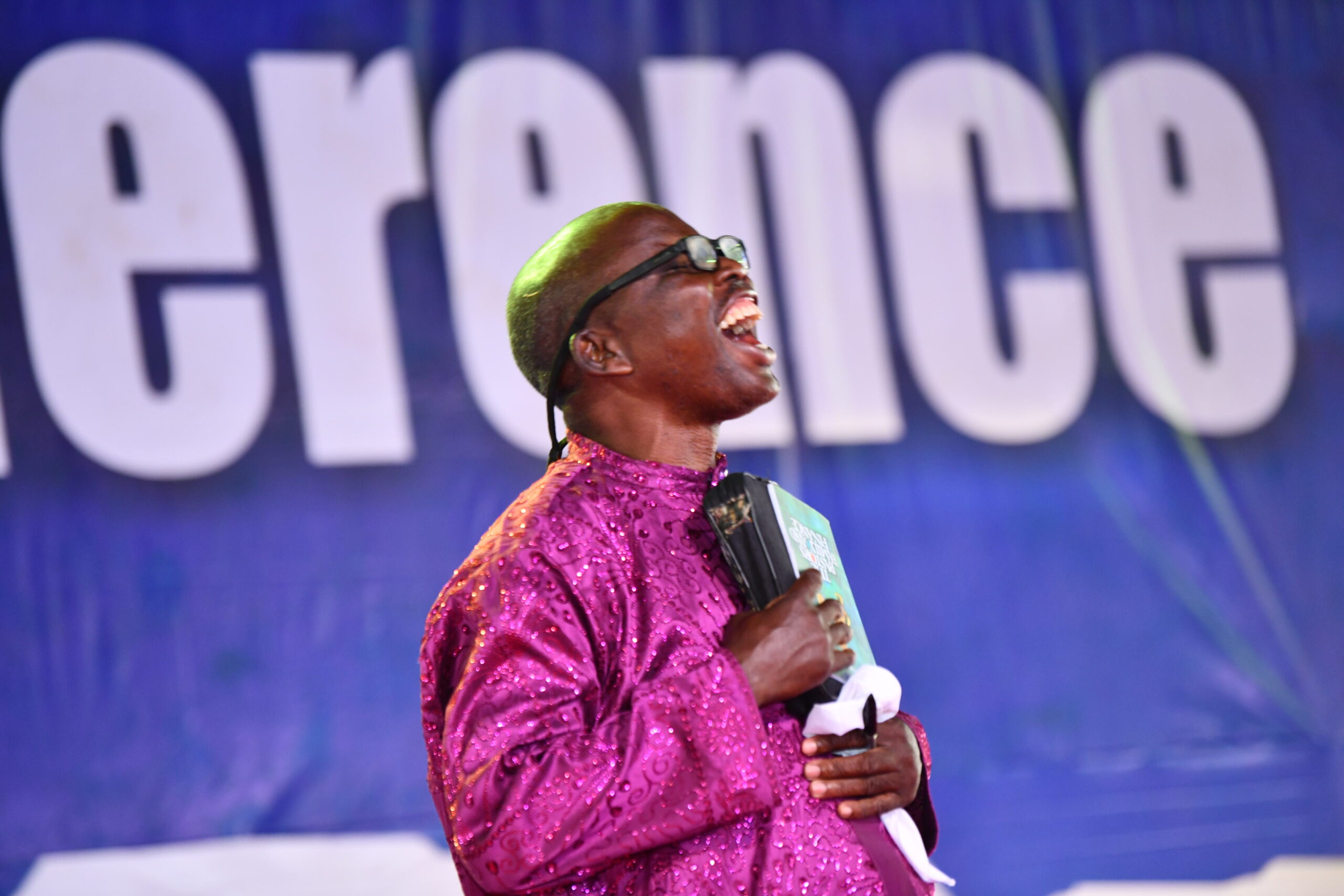

Recently, I had an intense exchange with some people on social media. I actually enjoyed it because it was very revealing, but at the same time it was also sickening.
I made a post about Igbo Odu Nation, Nnamdi Kanu, and some related issues. From the reactions, I could clearly see the decay in the minds of many young people in Nigeria.
One of the things that helped me in life is the environment where I grew up. I grew up in Warri, which was a relatively cosmopolitan town. I lived with Igala people, I lived with Igbo people, and there were Yoruba quarters. We lived together and interacted freely.
Then I went to Government College, and we had all kinds of people schooling with us. After that, I went to Federal Government College, Warri, where we had students from the North, the South, and even from other African countries. We had Zimbabweans and South Africans. I still remember one of them very clearly.
After that, I went to the University of Ibadan, and again there were people from everywhere.
What I have observed in Nigeria today is something similar to the Greek philosophical distinction between citizens, tribalists, and idiots. Tribalism has become very endemic in Nigeria.
Many young people today have had their minds intentionally polluted—either by extremist youths, by their parents, or simply by ignorance and deliberate stupidity.
Let me give you an example.
I once conducted a webinar. About 80–90% of those who registered were Yoruba, around 15% were Igbo, and about 5% were Edo and other tribes. Very few were from my own tribal group.
When you run a school like we do, you see the reality of diversity. In our school we have Igbo, Urhobo, Yoruba, Muslims, and Jehovah’s Witnesses. The Jehovah’s Witness students have their own time for fellowship, and I even joined them once just to observe. I discovered that there was no significant difference in values.
At one point, some of the Muslim children were singing Christian songs with us.
When you run a business in Nigeria, you quickly realise that it cannot survive on tribal sentiment alone. Except perhaps in a very small rural community, your success depends on people from different tribes.
Even where I live now, most of the people who have made the greatest impact on my life are from other tribes.
So for a young person to freeze himself intellectually as only an Igbo man, or only a Yoruba man, or only a Muslim, or only a Christian, is a very dangerous trend.
It is something we must liberate our young people from.
However, the truth is that the current leadership in Nigeria has not intentionally united the country.
Let me give another example.
There is a young girl I am currently raising money for. The donations I have received show something interesting. Only two people from her tribe donated. No one from her church donated. Yet the majority of donations came from Yoruba, Igbo, and people from other tribes.
Imagine if she had been tribalistic. She would have limited herself to only the help of people from her tribe.
Think about it.
How many aircraft owned by people from your tribe do you board?
How many buses owned by your tribe do you ride?
How many fuel stations owned by your tribe do you buy fuel from?
Much of the fuel in this country comes from companies owned by different ethnic groups. So what exactly is your tribe producing that you can rely on exclusively?
During Christmas, many wealthy Igbo businessmen travel home in large convoys and build big houses. Where did they make that money? Not just within their tribe. They made it across Nigeria.
Along this road here, the largest house belongs to an Igbo man who has a traditional title.
Many Pentecostal churches in Nigeria are headed by Yoruba leaders, but their congregations are spread across the whole country.
Look at the national football team. You see Igbo and Yoruba players predominantly, along with people from the Midwest and other minorities. When they go onto the field, they do not represent their tribes—they represent Nigeria.
Players like Victor Osimhen and Ademola Lookman do not go onto the field as tribal representatives. They go there to produce results.
Even the women’s national team has at times been dominated by players from one region, yet they play together as a national team.
This mentality of regionalism, secession, and tribal hatred is a very primitive mindset.
Interestingly, many of the people pushing for reforms and accountability in Nigeria are not tribalistic.
Take activists and commentators across the country. Many of them support causes that have nothing to do with their tribe. They support issues based on justice, not ethnicity.
For example, some activists travel across states to support causes, attend court hearings, or raise awareness about injustice—even when it has nothing to do with their tribe.
Meanwhile, many keyboard warriors who shout tribal slogans online will not step out of their houses to support any real cause.
Another thing I find amusing is how some young people try to use age as an insult.
They say, “Old man.”
Yes, I am an old man. But my brain is still working.
One of my classmates from medical school recently sent me a message after seeing my books advertised in the UK. He asked if I ever sleep because I am still producing work at this age.
Some of the people insulting me today may not even reach this age.
Some of them have empty, dirty, tribalistic minds.
One of them said Nigeria is a zoo. I asked him a simple question: if Nigeria is a zoo, and your father was born here and lives here, and your grandfather was born here and lives here, and every Christmas you return here—then what does that make you?
If you say you live in a zoo, then you are indirectly calling yourself an animal.
Nigeria is not perfect, but it is still one of the best places to live and succeed if we build the right systems.
If I had been born in certain societies with rigid caste systems, I might have remained permanently at the lowest level of society because of my family background.
What Nigeria needs is social justice, systems that allow people from humble backgrounds to rise.
That is why people across the country are pushing for accountability and reform.
For example, I have built two large schools in this locality, and I am currently building a third one. I employ people from different backgrounds.
Some people ask me: If you love Nigeria so much, why are your children and grandchildren overseas?
My answer is simple.
People travel abroad for education, exposure, enterprise, and connections. Many of the world’s great leaders studied abroad at some point.
Even today, foreigners live and work in Nigeria. Some Nigerians marry people from other countries.
So why should it be a problem if someone’s children or grandchildren live overseas?
That kind of jealousy and primitive thinking must stop.
Instead of focusing on hatred, people should hold their governors and leaders accountable.
In places like Aba and Onitsha, young entrepreneurs are doing remarkable things. Focus on development.
Stop insulting people who are working harder than you and contributing more to society.
And to those who promote ethnic hatred—whether Yoruba attacking Igbo, or Igbo attacking Yoruba, or religious extremists attacking others—you are only destroying the country we all depend on.
Stop using tribe and religion as weapons.
Focus on development, accountability, and productivity.
Dr. Charles Apoki is my name.


